About Machine Learning ( Part 5: Support Vector Machine )
Support Vector Machine (SVM)
Support Vector Machines (SVM) are one of the most powerful supervised learning algorithms used for classification and regression tasks.
The Hyperplane
In a binary classification problem, the goal of SVM is to find a hyperplane that best separates two classes. Given a training dataset:
$$
D = { (\mathbf{x}_1, y_1), (\mathbf{x}_2, y_2), \dots, (\mathbf{x}_n, y_n) }, \quad \mathbf{x}_i \in \mathbb{R}^d, \quad y_i \in {-1, +1}
$$
- $\mathbf{x}_i$: $d$-dimensional feature vector (e.g., pixel values in an image).
- $y_i$: Class label ($+1$ for “cat”, $-1$ for “dog”).
The Hyperplane
A hyperplane in $\mathbb{R}^d$ is defined as:
$$
\mathbf{w} \cdot \mathbf{x} + b = 0, \quad \mathbf{x} \in \mathbb{R}^d
$$
- $\mathbf{w}$: Weight vector (normal to the hyperplane).
- $b$: Bias term (shifts the hyperplane away from the origin).
- $\mathbf{x}$: Any point in the feature space.
Example: 2D Hyperplane
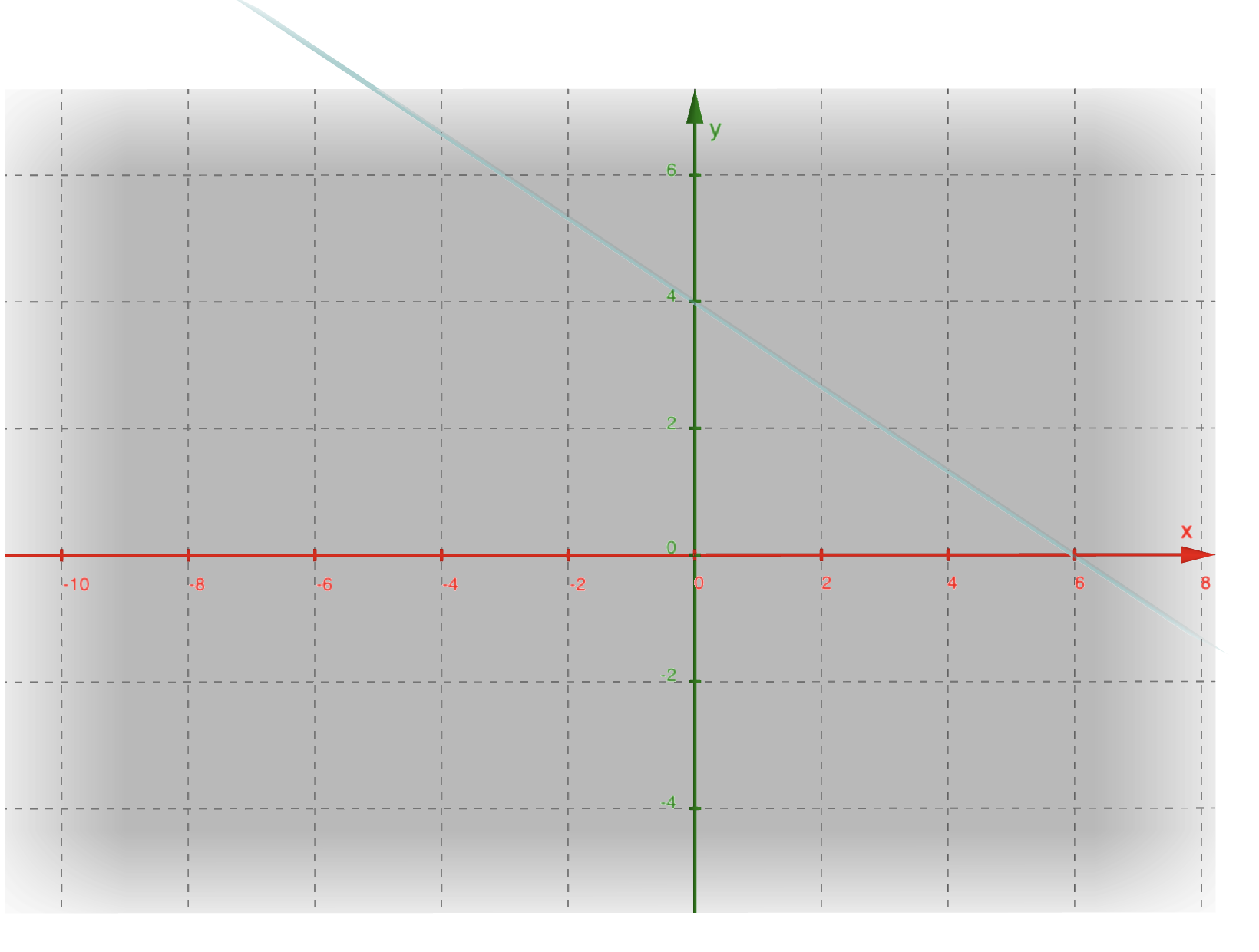
Consider a 2D hyperplane $2x_1 + 3x_2 - 12 = 0$:
- Normal Vector: $\mathbf{w} = [2, 3]$.
- Bias: $b = -12$.
The weight vector $\mathbf{w}$ is perpendicular to the hyperplane.
Margin Maximization
The distance from a sample $\mathbf{x}_i$ to the hyperplane is:
$$
\text{Distance} = \frac{|\mathbf{w} \cdot \mathbf{x}_i + b|}{|\mathbf{w}|}.
$$
SVM seeks the hyperplane that maximizes the minimum margin between classes:
$$
\max_{\mathbf{w}, b} ( \frac{2}{|\mathbf{w}|} ) \quad \text{subject to} \quad y_i(\mathbf{w} \cdot \mathbf{x}_i + b) \geq 1, , \forall i.
$$
This is equivalent to minimizing $|\mathbf{w}|^2$, a convex optimization problem solvable via quadratic programming.
Optimize
Linear Separation with Hard Margin
When data is perfectly linearly separable, SVM seeks the hyperplane with maximum margin:
$$
\min_{\mathbf{w}, b} \frac{1}{2}|\mathbf{w}|^2 \quad \text{subject to} \quad y_i(\mathbf{w}^T\mathbf{x}_i + b) \geq 1, , \forall i
$$
Geometric Interpretation:
The margin width is $\frac{2}{|\mathbf{w}|}$. Maximizing margin = minimizing $|\mathbf{w}|$.
The Limitation:
Fails catastrophically when:
- Data has noise/outliers
- Classes are inherently non-separable
Soft Margin SVM
Allow controlled violations using slack variables $\xi_i$:
$$
\begin{aligned}
\min_{\mathbf{w}, b, \xi} &\quad \frac{1}{2}|\mathbf{w}|^2 + C\sum_{i=1}^n \xi_i \
\text{s.t.} &\quad y_i(\mathbf{w}^T\mathbf{x}_i + b) \geq 1 - \xi_i \
&\quad \xi_i \geq 0, \quad \forall i
\end{aligned}
$$
- $C$: Penalty weight (Large $C$ ≈ Hard Margin)
- $\xi_i$: How much the $i$-th sample violates the margin
Lagrangian Formulation
Convert constraints into the objective function:
$$ \mathcal{L} = \frac{1}{2}\|\mathbf{w}\|^2 + C\sum_{i=1}^n \xi_i - \sum_{i=1}^n \alpha_i[y_i(\mathbf{w}^T\mathbf{x}_i + b) - 1 + \xi_i] - \sum_{i=1}^n \mu_i\xi_i $$Key Derivations:
Primal Variables
- $\frac{\partial \mathcal{L}}{\partial \mathbf{w}} = 0 \Rightarrow \mathbf{w} = \sum \alpha_i y_i \mathbf{x}_i$
- $\frac{\partial \mathcal{L}}{\partial b} = 0 \Rightarrow \sum \alpha_i y_i = 0$
- $\frac{\partial \mathcal{L}}{\partial \xi_i} = 0 \Rightarrow \alpha_i + \mu_i = C$
Dual Problem
Substitute back to get:
$$
\max_{\alpha} \sum_{i=1}^n \alpha_i - \frac{1}{2}\sum_{i,j} \alpha_i \alpha_j y_i y_j \mathbf{x}_i^T \mathbf{x}_j \
\text{s.t.} \quad 0 \leq \alpha_i \leq C, \quad \sum \alpha_i y_i = 0
$$
Interpretation of $\alpha_i$
| $\alpha_i$ Range | Sample Status | $\xi_i$ Value |
|---|---|---|
| $=0$ | Outside margin | 0 |
| $(0, C)$ | On margin | 0 |
| $=C$ | Inside margin | $>0$ |
Decision Function:
$$
f(\mathbf{x}) = \text{sign}( \sum_{\alpha_i > 0} \alpha_i y_i \mathbf{x}_i^T \mathbf{x} + b)
$$
Nonlinear Classification with Kernel Trick
The Fundamental Idea
Problem: Many datasets require nonlinear boundaries.
Solution: Map data to higher dimension $\phi(\mathbf{x})$ where linear separation becomes possible.
Example Transformation:
For $\mathbf{x} = [x_1, x_2]$, use $\phi(\mathbf{x}) = [x_1, x_2, x_1^2 + x_2^2]$
The Computational Challenge
Direct computation of $\phi(\mathbf{x}_i)^T \phi(\mathbf{x}_j)$ in high dimensions is intractable.
Key Insight: Many ML algorithms (like SVM) only need inner products, not explicit coordinates.
Kernel Functions to the Rescue
Replace $\phi(\mathbf{x}_i)^T \phi(\mathbf{x}_j)$ with kernel $K(\mathbf{x}_i, \mathbf{x}_j)$:
Updated Dual Problem:
$$
\max_{\alpha} \sum_{i=1}^n \alpha_i - \frac{1}{2}\sum_{i,j} \alpha_i \alpha_j y_i y_j K(\mathbf{x}_i, \mathbf{x}_j)
$$
Common Kernels:
| Kernel | Formula | Characteristics |
|---|---|---|
| Linear | $K(\mathbf{x}, \mathbf{z}) = \mathbf{x}^T\mathbf{z}$ | No transformation |
| Polynomial | $(\mathbf{x}^T\mathbf{z} + c)^d$ | Captures polynomial interactions |
| RBF | $\exp(-\gamma |\mathbf{x}-\mathbf{z}|^2)$ | Infinite-dimensional mapping |
| Sigmoid | $\tanh(\alpha \mathbf{x}^T\mathbf{z} + c)$ | Mimics neural networks |
3.4 Why Kernels Work: Mercer’s Theorem
A valid kernel must:
- Be symmetric: $K(\mathbf{x}, \mathbf{z}) = K(\mathbf{z}, \mathbf{x})$
- Produce positive semi-definite Gram matrix
Practical Check: If SVM training converges, your kernel is valid.
About Machine Learning ( Part 5: Support Vector Machine )
https://kongchenglc.github.io/blog/2025/02/02/Machine-Learning-5/